
How Changing Your Posture Can Change Your Life

Health care professionals seem to constantly be talking about posture. While many people take away the message that they should “stand up straighter” the truth about what good posture is and why you should aim to have it is a little more complicated.
AC Joint Sprains (Separated Shoulder)

The AC (Acromio-clavicular) joint is a thick fibrous joint that connects the top of the shoulder blade to the outer end of the collarbone. The joint is required to be strong and supportive and is the primary way in which weight bearing forces are transferred from the upper limb to the rest of the skeleton.
The primary mechanism that will cause this joint and its ligaments to be injured is a force that separates the shoulder away from the collarbone, usually in a downwards direction.
Online Bookings Now Available!

Making an appointment with one of our experienced Physiotherapists is now easier than ever with our new online booking system – powered by HealthEngine.
Learn more here.
Physio Tips For a Comfortable Sleep

For most of us, the hours we spend sleeping are simply a time for rest and recovery. However, you might be surprised to learn that your sleeping position can have a significant impact on your body, particularly if you already have an injury. Here are some tips from Eramosa Physiotherapy to help you stay pain free overnight.
Rotator Cuff Tears

Rotator cuff tears are common injuries and can occur in any of the four muscles, usually at their weakest point, which is the junction between the muscle and tendinous tissue. These tears are common in racket and throwing sports and are one of the leading causes of shoulder pain. The prevalence of rotator cuff tears increases as we age due to age related degenerative changes in the tissues.
Strains vs. Sprains
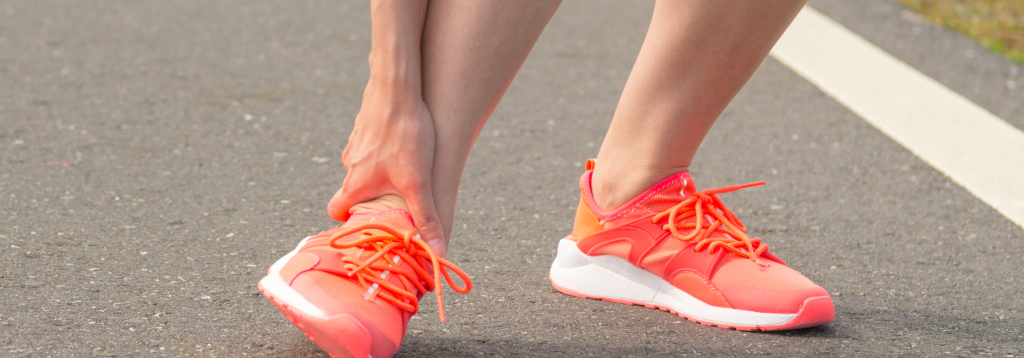
Strains and sprains are words that are used almost interchangeably when describing injuries, however, they each have quite distinct meanings.
The most straightforward explanation is that a “strain” refers to a tear in a muscle or tendon, while a “sprain” refers to a tear in ligament fibers.
Safe School Backpack Guide

With the new school term beginning next week, it’s essential to ensure that your child has the right backpack for the 2023 school year.
Recent research has shown a relationship between school bag loads, posture problems and spinal pain. Choosing an appropriate school bag, having it fitted correctly and wearing it properly is crucial to ensure the healthy development of your child’s spine.
Tennis Elbow

Tennis elbow, also known as Lateral Epicondylitis, is a common condition characterised by pain at the outside of the elbow with movements of the wrist and hand. The pain is usually localised to the tendon of a small muscle of the forearm just below the elbow called Extensor Carpi Radialis Brevis (ECRB).
Three Reasons To See Your Physiotherapist
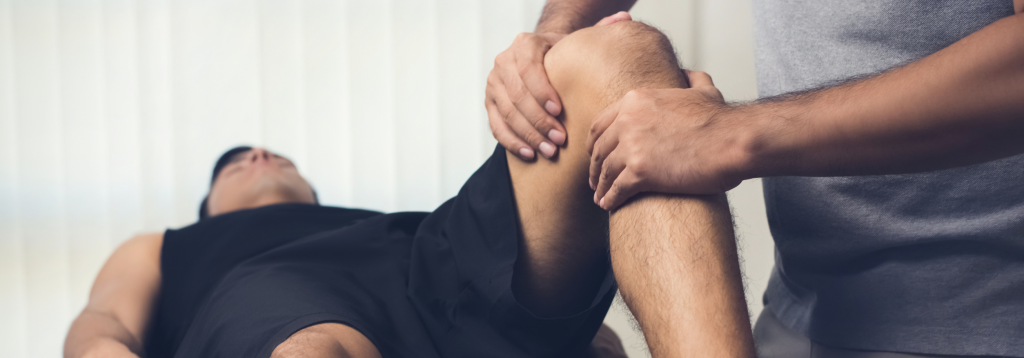
Most people associate physiotherapy with pain and injury management. While helping you recover from pain is our specialty, physiotherapists are also able to help with many more issues. Here are three things that you may not have thought to visit a physiotherapist for.